Digital workflow
Digital dentistry, in practice
Digital dentistry means recording, designing and making a restoration from a precise three-dimensional record of your teeth. The tools are useful because of the planning around them, not instead of it.
From scan to restoration
Explore the digital workflow
Step through each stage. The text explains what happens; the model shows it. Same-day completion applies to selected cases after clinical assessment.
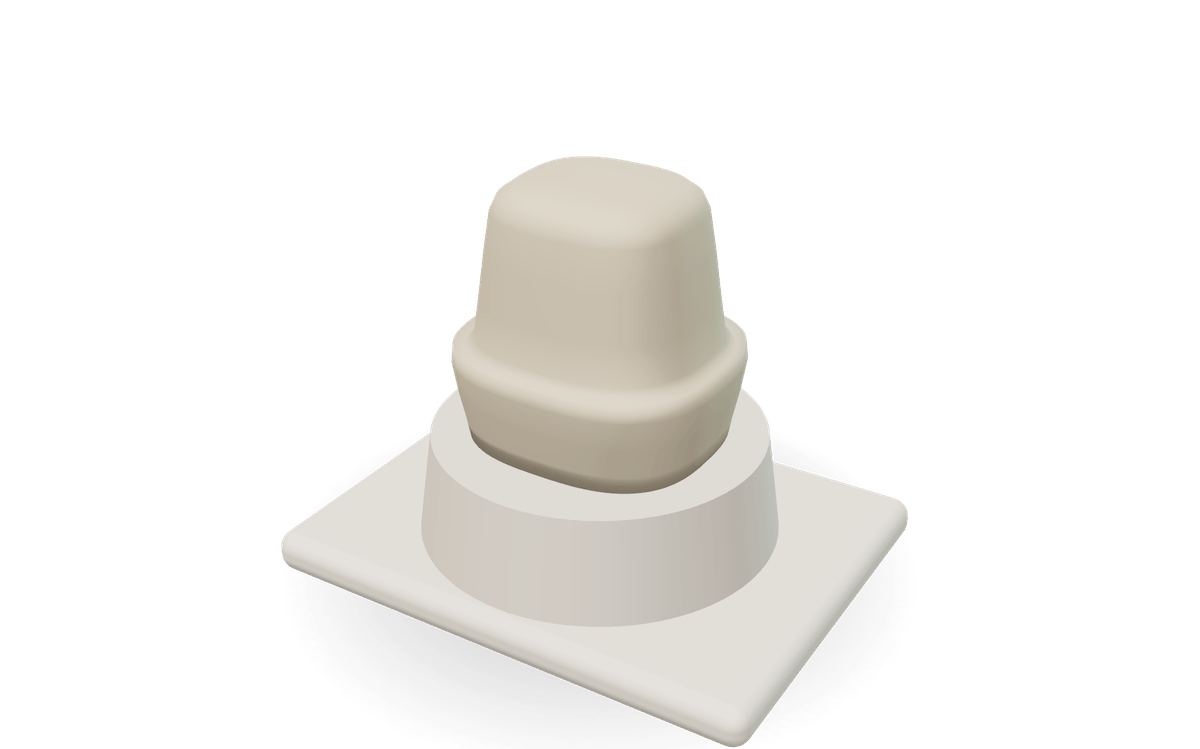
Educational sequenceConceptual model, not a patient scan or a timed procedure.
Assessment
Every digital workflow starts with a clinical examination, not a scan. The dentist looks at the health of the teeth and gums, how the bite works and what you would like to change. X-rays or photographs may be taken where they help answer a specific question.
- Clinical consideration
- Is the tooth, gum and bite healthy enough to support the restoration being considered?
- Technical consideration
- What material, thickness and design approach would the planned restoration need?
Intraoral scan
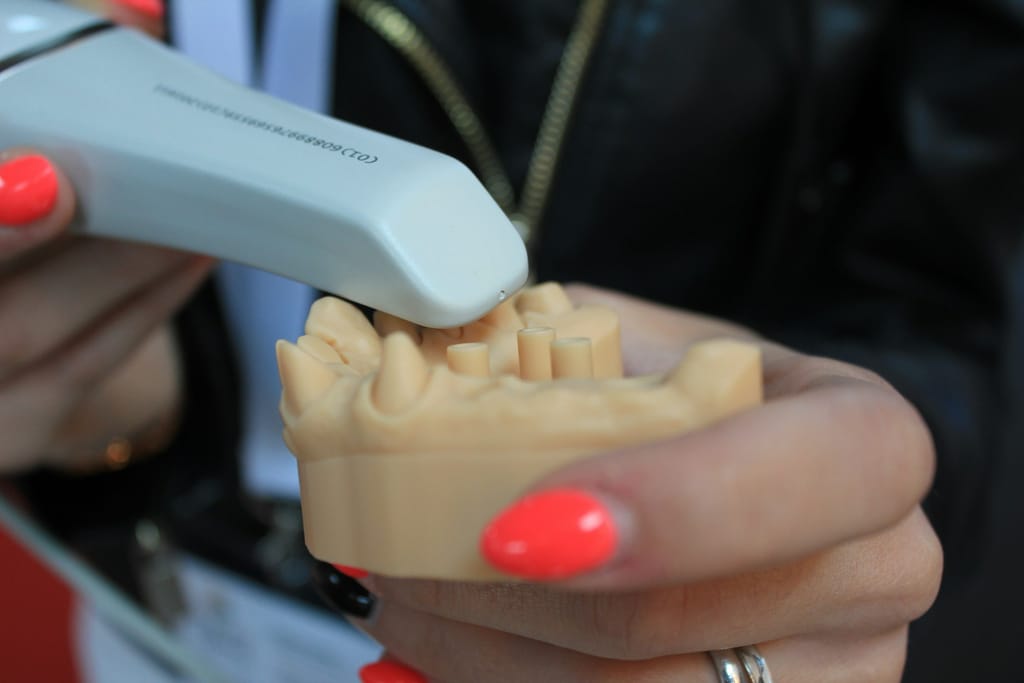
A small wand is moved around the mouth and captures many images that software stitches into a three-dimensional model. The model can be checked on screen straight away, and any gaps in the data can be rescanned. Where a scan cannot capture an area reliably, a conventional impression may be used instead.
- Clinical consideration
- The area must be dry and the edges of the prepared tooth clearly visible for the scan to be accurate.
- Technical consideration
- The scan needs complete, distortion-free data at the margins and on the opposing teeth to design a good fit.
CAD design
Using computer-aided design (CAD), the restoration is shaped to fit the prepared tooth and to meet the neighbouring and opposing teeth. Shape, contact points and thickness are adjusted before anything is made. The design reflects decisions made at assessment rather than a default template.
- Clinical consideration
- The design must respect the bite, the gum line and how the tooth will be cleaned.
- Technical consideration
- Minimum material thickness, margin position and contact strength are set to suit the chosen ceramic.
Fabrication
Computer-aided manufacturing (CAM) turns the design into a physical restoration, often by milling it from a solid block of ceramic. After milling, the restoration is adjusted, polished and glazed or fired as its material requires. Some restorations are better made in a dental laboratory, for example when layered ceramics are needed.
- Clinical consideration
- The choice of where and how to fabricate depends on the case, not on convenience alone.
- Technical consideration
- Each material has its own finishing steps, such as polishing, glazing or a crystallisation firing.
Try-in and fit
The restoration is tried on the tooth to check the margins, contacts, bite and colour. Small adjustments are made where needed, and it is then bonded or cemented. If something is not right, it can be adjusted further or remade.
- Clinical consideration
- The bite is checked in several jaw movements so the new restoration does not overload the tooth.
- Technical consideration
- Fit at the margins and the final surface finish affect how well the restoration lasts and how easily it is cleaned.
What the term means in day-to-day care
In a digital workflow, the teeth are recorded with an intraoral scanner rather than an impression tray, the restoration is designed on a computer, and the design is used to manufacture it. Each step passes a precise digital file to the next, which reduces some of the manual transfer steps found in conventional methods.
For a patient, this usually means fewer impression trays, a model of your teeth you can see on screen, and in selected cases the option of making a restoration within the practice. It does not change the basic questions a dentist has to answer: whether the tooth is healthy, what it needs and what will last.
Dr Elchin Abbasov is a DHA-licensed General Dentist who trained as a dental technician before qualifying as a dentist. That background shapes how he uses digital tools: a scan and a design are judged by how the restoration will be made and how it will behave in the mouth, not by how they look on screen.
The three technologies
Each technology has its own page explaining what it does, what it suits and where its limits are.
Intraoral scanning
A handheld camera that records the teeth as a three-dimensional model. How scanning works.
CAD/CAM design
Designing the restoration on screen and turning that design into instructions for manufacture. About CAD/CAM.
In-clinic milling
Shaping a restoration from a solid ceramic block within the practice, then finishing it. About in-clinic milling.
Digital tools support clinical judgement
A scanner records what it can see, and software designs what it is told. Neither decides whether a tooth should be treated, how much tooth to keep or which material is appropriate. Those are clinical decisions made at assessment and discussed with you.
Some cases are still better served by conventional impressions, for example where an edge sits deep beneath the gum. Some restorations are still better made in a dental laboratory, particularly where layered ceramics or complex multi-tooth work are involved. A good plan uses whichever method suits the case.
Clinical and technical views of a digital workflow
A digital restoration has to work as a piece of dentistry and as a piece of manufacturing. Both views are considered together.
Clinical view The dentist
- Gum health and bleeding control, because a scan cannot record an edge it cannot see.
- How the bite works in different movements, as well as when the teeth are closed.
- How much healthy tooth can be preserved during preparation.
- Whether you will be able to clean around the restoration easily.
Technical view The technician
- Whether the scan data at the margins is complete and accurate enough to design from.
- The minimum thickness each ceramic needs to be strong in that position.
- Whether milling can reproduce the shape and detail required, or a laboratory is more suitable.
- The finishing steps the material requires, such as polishing, glazing or firing.
Digital workflows and same-day restorations
Scanning, design and in-clinic milling make it possible to complete selected crowns, veneers and other restorations in a single visit. This is considered following clinical assessment, where the case and material allow it. Complex cases may need more than one appointment, and the same-day dentistry page explains how that decision is made.
Where digital workflows are used
Digital methods can play a part in several treatments. How much they are used depends on the individual plan.
Crowns
Scanning and CAD/CAM design are commonly used for single crowns. Dental crowns.
Veneers
Digital records can help plan shape and proportion, though some veneers are still made by layering in a laboratory. Porcelain veneers.
Implant-supported restorations
Scans can record implant positions for designing the crown or bridge that sits on them. Implant-supported restorations.
Smile planning
Digital records and photographs can help visualise proposed changes before treatment begins. Digital smile design.
Questions you may want to ask
- Which parts of my treatment would use a digital workflow, and which would not?
- Would my restoration be made in the practice or in a laboratory, and why?
- Is there anything about my teeth or gums that would make a scan less reliable?
- Can I see my scan and the proposed design before the restoration is made?
Questions
Frequently asked
General answers only. Your dentist will explain what applies to you.
Is a digital restoration better than a conventional one?
Not automatically. Digital methods can improve consistency and reduce some steps, but the quality of a restoration depends on the diagnosis, preparation, design and material choice. Some cases are better suited to conventional or laboratory methods.
Does a digital workflow mean I will not need an impression?
In many cases a scan replaces the impression tray. Where an area is difficult to scan accurately, such as an edge deep beneath the gum, a conventional impression may still be used.
Does digital dentistry mean treatment is always finished in a single visit?
No. In selected cases, following clinical assessment, a restoration can be designed and milled within the same visit. Many cases, particularly complex ones or those needing laboratory work, need more than one appointment.
Who designs the restoration?
In a CAD/CAM workflow the restoration is designed on screen using design software. Dr Abbasov's background as a dental technician means he reviews a design with its material, thickness and fit in mind before it is made.
Keep reading
Related information
Technology
Intraoral scanning
How a digital scan of your teeth is taken, what it is used for and when a conventional impression may still be the better record.
Explore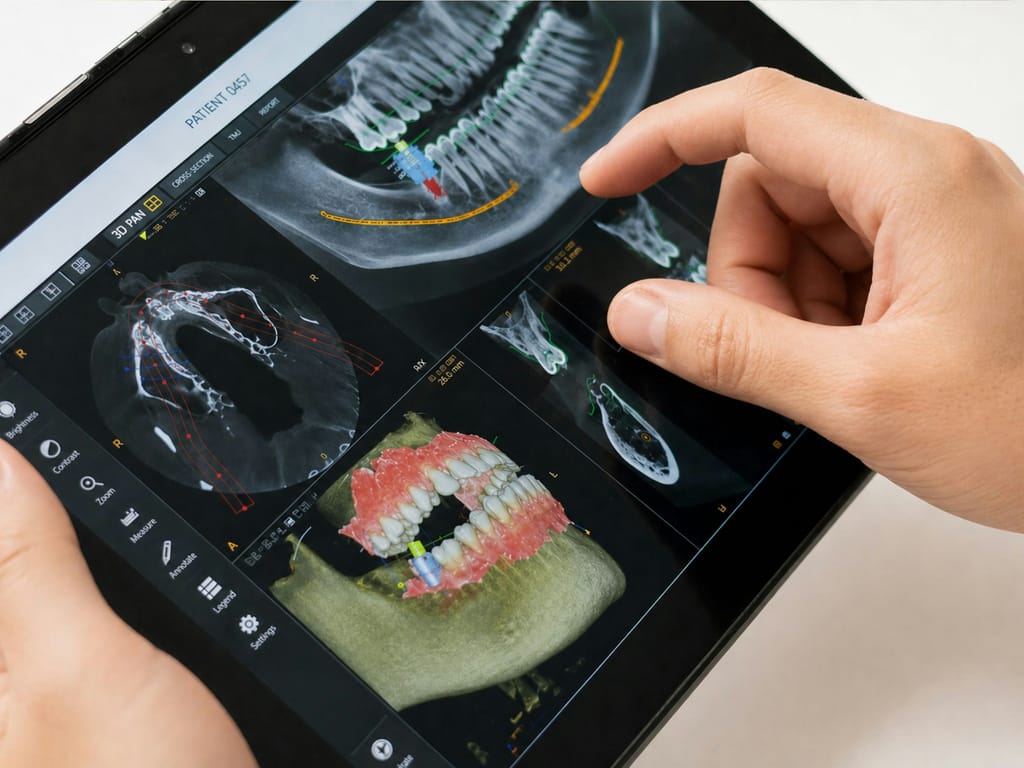
Technology
CAD/CAM
What happens between the scan and the finished restoration: how it is designed on screen, what the design must get right and how it is made.
Explore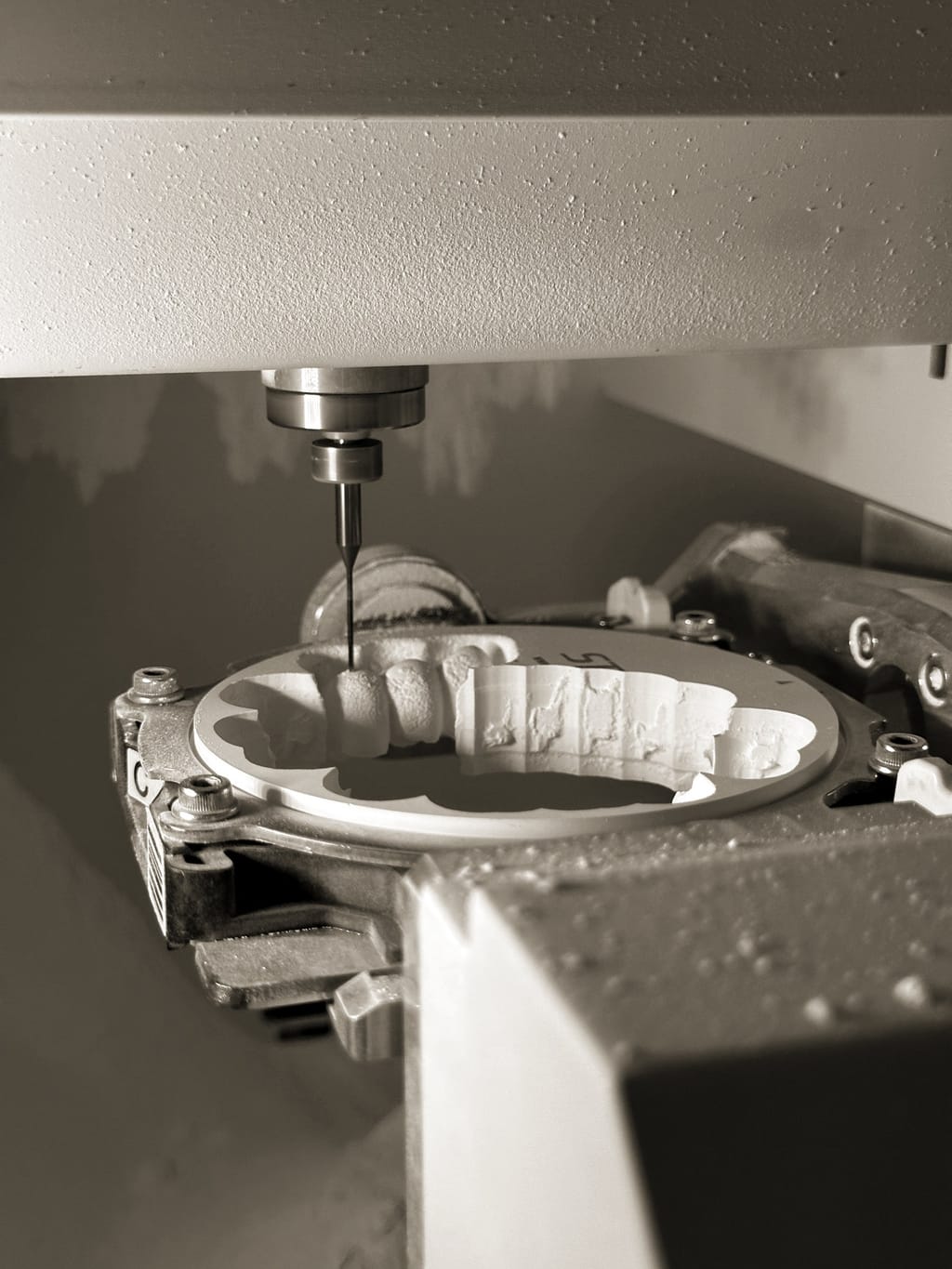
Technology
In-clinic milling
How a crown or veneer is milled from a ceramic block and finished within the practice, and when laboratory work may be the better route.
Explore
Same-day care
Same-day dentistry
How a one-visit restoration can work in selected cases, what decides suitability, and when more than one appointment is the sensible plan.
ExploreNext step