Same-day treatment
Same-day crowns: the one-visit planning question
In selected cases, following clinical assessment, a crown may be designed, milled and fitted in a single visit. Whether that suits a particular tooth depends on its health, how much of it remains and how it meets the bite; complex cases may need more than one appointment.

What this page covers
A crown covers a tooth to restore its shape, strength and appearance, usually where a large filling, a fracture or wear has left the tooth weakened. General information about crowns, materials and alternatives is on the dental crowns page. This page focuses on a narrower question: whether a crown can sensibly be completed in one visit.
In a one-visit workflow, the prepared tooth is scanned, the crown is designed on screen and then milled in the clinic. In selected cases, following clinical assessment, the crown can be fitted at the same appointment as the preparation. Complex cases, or teeth that need other treatment first, may need more than one appointment.
What the assessment considers
These factors are weighed together. Your dentist will explain how they apply to your tooth.
Health of the tooth and root
Decay, cracks and infection are assessed first. A tooth that needs root canal treatment usually has that completed before the crown is planned.
Remaining structure
Enough sound tooth is needed to hold a crown. Where a lot has been lost, a core build-up or a post may be needed first, which can change the sequence.
Margin position
Where the edge of the crown will sit relative to the gum affects whether it can be scanned accurately and kept clean.
Gum condition
Bleeding or inflamed gums make an accurate scan difficult and may need to settle before the crown is made.
Bite and load
Back teeth carry heavy chewing forces, and grinding affects the choice of material and how thick it needs to be.
Position in the mouth
A back tooth with modest aesthetic demands is a different question from a front tooth that must match its neighbours closely.
Planning and treatment stages
Where a crown is judged suitable for a one-visit approach after clinical assessment, the stages usually run in this order. The plan can change at any stage if the tooth needs more.
Examination and planning
The tooth, its neighbours, the gums and the bite are examined, and X-rays may be taken. Suitability for a one-visit approach is considered here.
Preparation
Old filling material and any decay are removed, and the tooth is shaped to make room for the crown.
Scan
The prepared tooth, the neighbouring teeth and the opposing teeth are scanned to create a 3D model. See intraoral scanning.
Design
The crown is designed on screen using CAD/CAM, setting its contacts with neighbouring teeth, how it meets the bite and where its margins sit.
Milling and finishing
The crown is milled from a solid block, then adjusted, stained, glazed or polished. Some materials also need a firing stage to reach their final strength.
Fit and review
The crown is tried in and checked for fit and bite, then cemented or bonded. A review allows the bite and gums to be checked once settled.
Alternatives and limitations
A one-visit crown is one option among several. Your dentist will discuss which are relevant to you.
Laboratory-made crown
Made by a technician over more than one visit, with a temporary crown in between. This may suit complex colour, several linked teeth or certain materials.
Onlay or partial coverage
Where enough of the tooth remains, a restoration covering part of the biting surface may preserve more natural tooth.
A large filling
In some cases a filling may be enough, although it may not protect a weakened tooth in the same way a crown can.
Implant-supported crown
Where a tooth cannot be kept, a crown on an implant may be considered within a coordinated plan, with the implant placed by a suitable clinician. See implant-supported restorations.
How many appointments to expect
The number of visits can vary. In selected cases, following clinical assessment, the crown is prepared, made and fitted in one appointment, with a review afterwards. Complex cases may need more than one appointment.
A crown is more likely to be planned over several visits when the tooth needs root canal or gum treatment first, when several crowns must be coordinated in the bite, when the margin sits deep below the gum, or when a laboratory-layered material suits the tooth better. The plan may also change on the day if preparation reveals more decay or a crack than expected.
Materials and colour: chairside or laboratory
Crowns milled in the clinic are made from blocks of ceramic or composite. High-strength ceramics are often considered for back teeth that carry heavy chewing forces, while more translucent ceramics may be considered where appearance leads.
For a back tooth, a milled crown finished with stain and glaze often blends well. For a front tooth beside very characterised natural teeth, a crown layered by hand in a laboratory may give more internal depth of colour, and that usually means more than one appointment. Your dentist will discuss the trade-offs for your tooth.
Clinical and technical perspectives
Dr Elchin Abbasov is both a dentist and a dental technician, so a crown is planned with its fabrication in mind from the start. These are the questions each side asks.
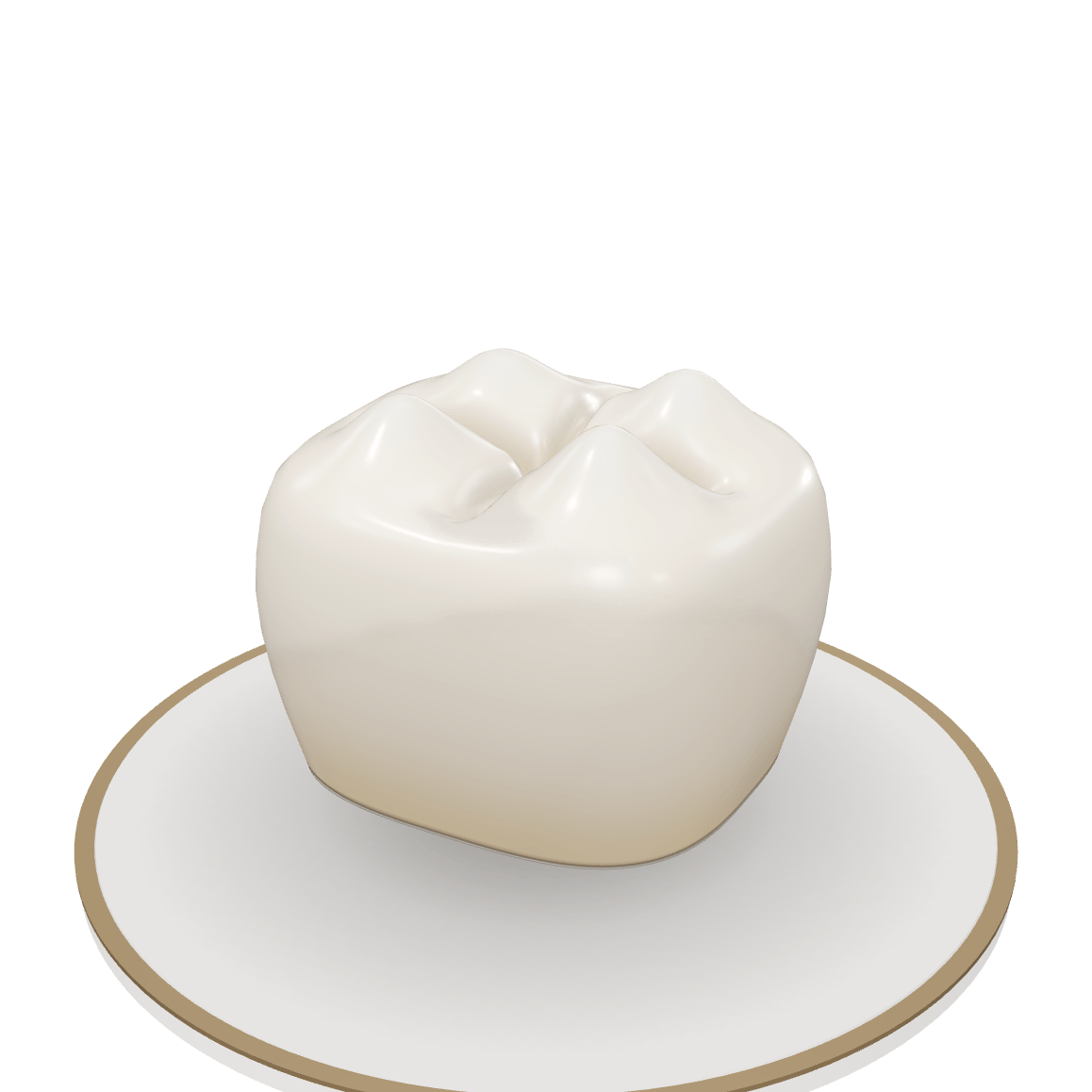
Fig. — CrownEducational 3D model, not a patient scan. Drag to rotate, or tap Explore in 3D on touch screens.
Clinical view The dentist
- Is the tooth healthy enough to crown now, or does it need root or gum treatment first?
- How much sound tooth remains to support and hold the crown?
- Where will the margin sit, and can it be kept clean at home?
- How does the tooth meet the opposing teeth when biting and chewing, and is there grinding?
- How visible is the tooth when speaking and smiling?
Technical view The technician
- The wall thickness the chosen material needs to resist chewing forces
- Occlusal anatomy: the cusps and grooves of the biting surface, shaped to meet the opposing teeth
- Contact points with neighbouring teeth, firm enough to stop food trapping but still easy to floss
- Margin fit, and how accurately the scan has captured the tooth at the gum line
- Material choice: strength for load-bearing back teeth, translucency where appearance matters more
Risks, limitations and maintenance
Your dentist will explain the risks relevant to you. In general terms:
- Preparing a tooth for a crown removes tooth structure and is not reversible
- The tooth may feel sensitive for a period after preparation and fitting
- A crowned tooth can still develop decay at the margin if that area is hard to clean
- Ceramic can chip or fracture, especially with grinding
- A heavily restored tooth may later need root canal treatment
- Regular check-ups and careful cleaning around the gum line help maintain the crown. See caring for restorations.
Questions you may want to ask
- Does this tooth need any treatment before a crown is considered?
- Is there enough tooth left for a crown, or would a build-up be needed first?
- Would an onlay or a filling be a reasonable alternative for this tooth?
- Which material would you consider for this position in my mouth, and why?
- What would happen if the crown could not be completed on the day?
- What should I prepare before the consultation? There is a short guide to preparing for a consultation.
Questions
Frequently asked
General answers only. Your dentist will explain what applies to you.
Can I have a crown fitted in one visit?
In selected cases, following clinical assessment, a crown may be designed, milled and fitted in one visit. Complex cases, or teeth that need root canal or gum treatment first, may need more than one appointment.
Is a same-day crown as strong as a laboratory crown?
Strength depends mainly on the material, its thickness, the fit and the bite, rather than on where the crown was made. Your dentist will discuss the material options suited to your tooth and their limitations.
What if my tooth needs root canal treatment?
Root canal treatment, and any healing it needs, usually comes before the crown, so the case is unlikely to be completed in one visit. Your dentist will explain the sequence.
Can an implant crown be made on the same day?
Some implant restorations can be designed digitally and milled, but many implant cases need healing time and several stages, so they are not routinely same-day. Suitability is assessed in each case, and complex cases may need more than one appointment.
Keep reading
Related information
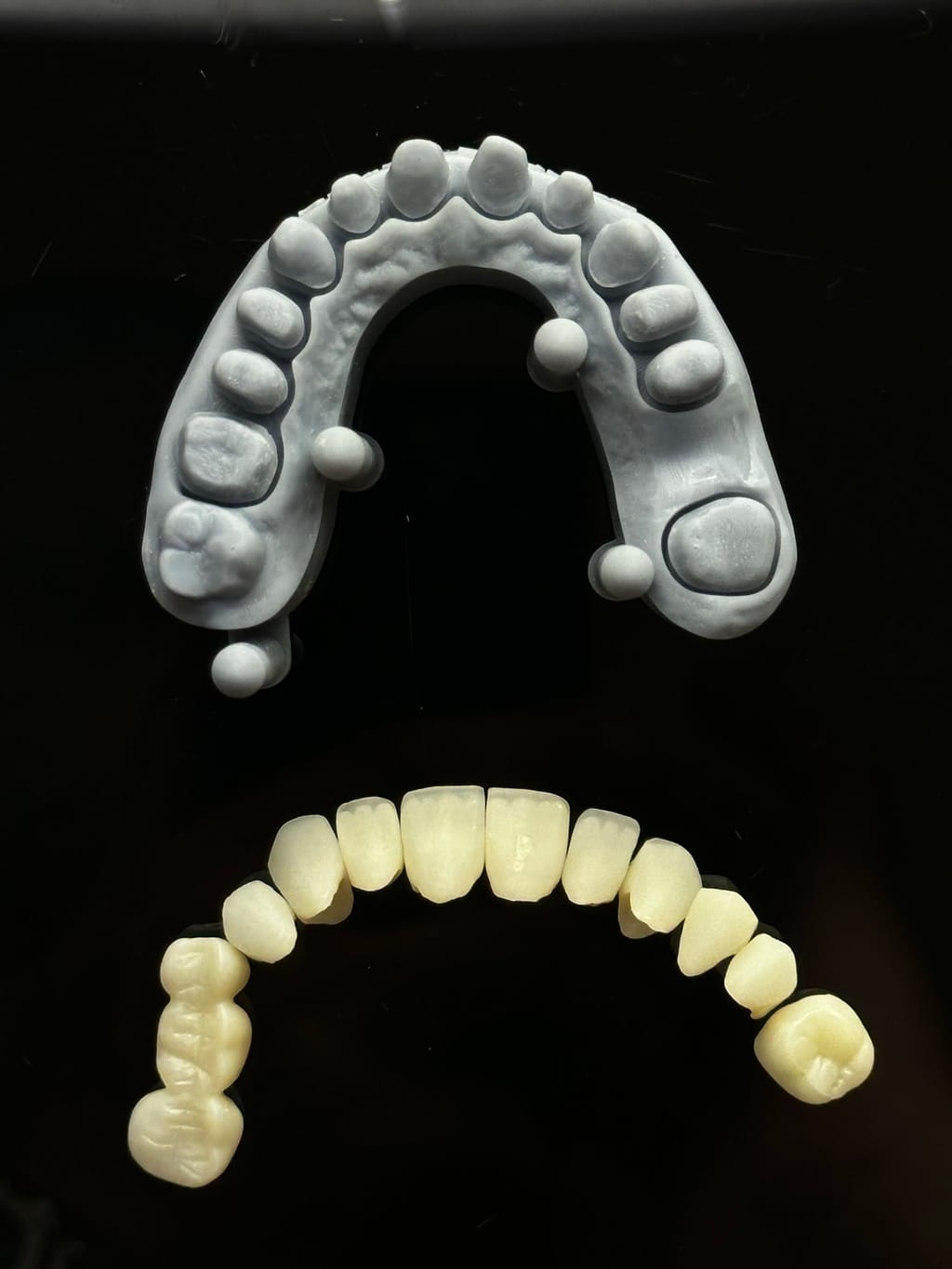
Restorative treatment
Dental crowns
Restorations that cover the whole visible tooth, often discussed when decay, fracture or large fillings have weakened it.
Explore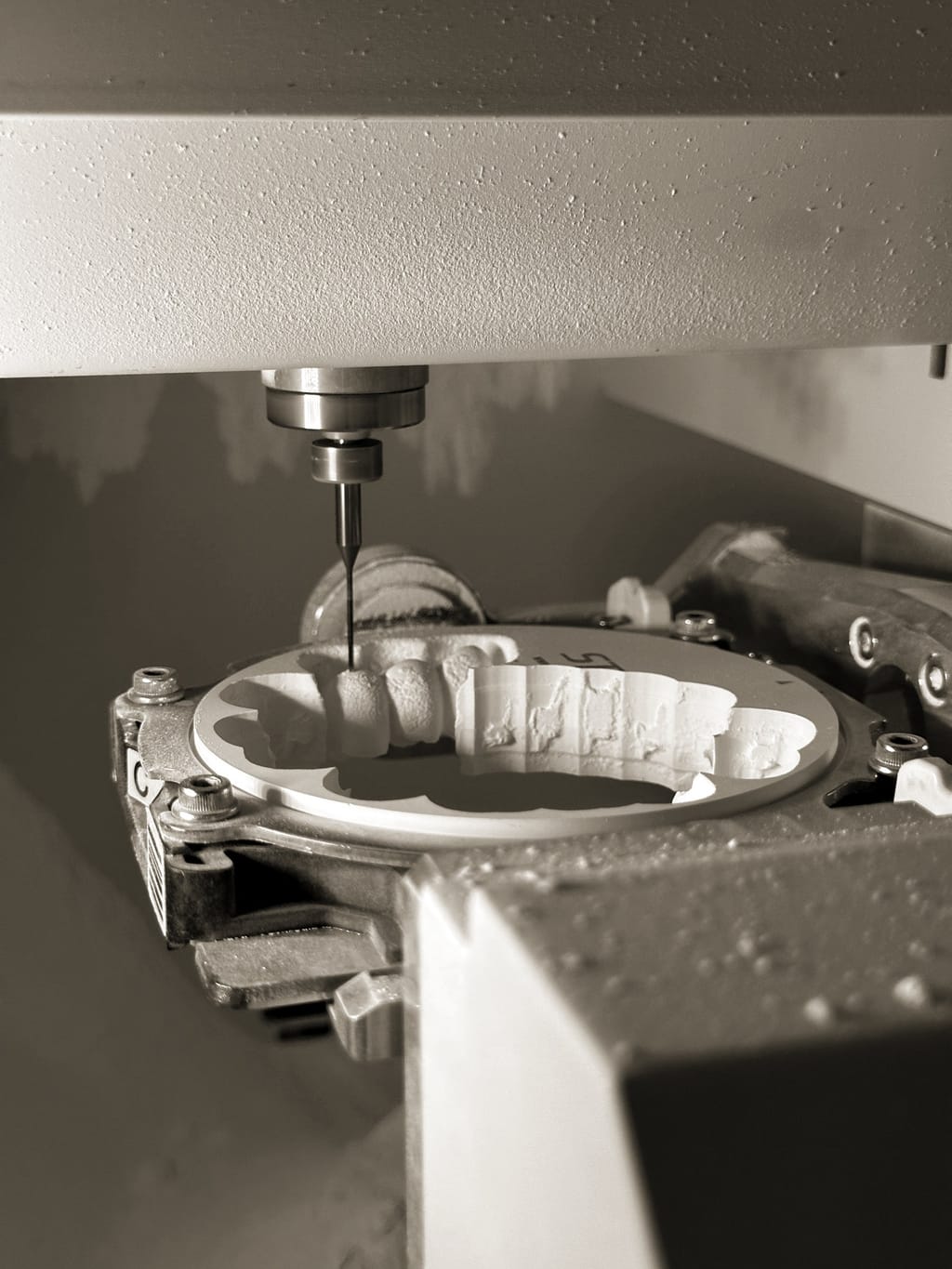
Same-day care
Same-day dentistry
How a one-visit restoration can work in selected cases, what decides suitability, and when more than one appointment is the sensible plan.
Explore
Technology
In-clinic milling
How a crown or veneer is milled from a ceramic block and finished within the practice, and when laboratory work may be the better route.
Explore
Patient resource
Understanding same-day care
What decides whether a restoration can be completed in a single visit, the trade-offs involved and questions to discuss at consultation.
ExploreNext step