Technology
Intraoral scanning
An intraoral scanner is a small handheld camera that records your teeth and gums as a three-dimensional digital model. For many restorations it takes the place of a traditional impression tray.
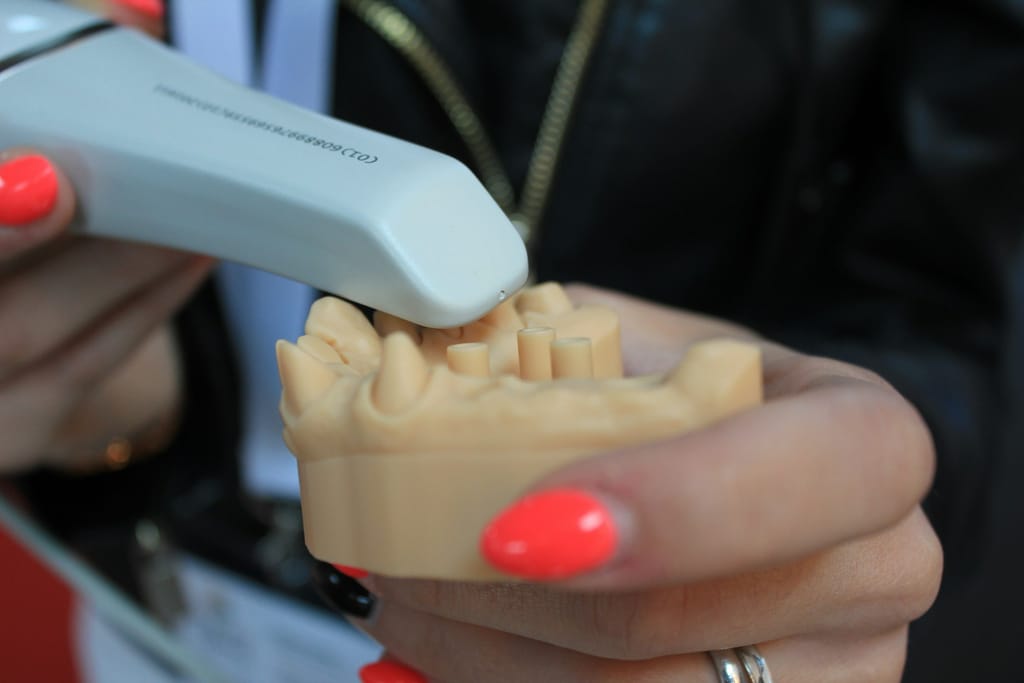
What a scan records
A dental impression is a record of the shape of your teeth. Traditionally it is taken with a tray of soft material that sets in the mouth. An intraoral scan records the same information optically: the scanner captures a rapid series of images as it moves, and software joins them into a three-dimensional model.
The model shows the teeth, the gum line and, when needed, the opposing teeth and how they meet. It can be rotated and enlarged on screen, which makes it easier to check details and to talk through what you are seeing.
How a scan is taken
The process is the same whether the scan is for planning, for a crown or for an implant-supported restoration, though what is captured varies.
Preparing the area
The teeth are kept dry and the cheeks and tongue are gently held back, because saliva and movement can blur the data.
Scanning the arch
The wand is moved steadily along the teeth, recording the biting surfaces, the sides and the gum line. You can breathe and swallow normally between passes.
Recording the bite
With your teeth together, a scan from the side records how the upper and lower teeth meet.
Checking the model
The model is reviewed on screen. Any missing or unclear areas can be rescanned there and then.
What scans are used for
A scan is a record, so it can serve several purposes within a plan.
- Designing crowns, onlays and selected veneers using CAD/CAM
- Recording the position of dental implants for the restoration that will sit on them
- Planning changes to tooth shape and proportion, alongside photographs
- Keeping a baseline record to compare against at later reviews
- Sending precise data to a dental laboratory when a restoration is made there
What it feels like
Most people find a scan easier than an impression tray, because there is no material to hold in the mouth and nothing to set. The scanner tip is compact, and the scan can be paused if you need a break.
Some people with a strong gag reflex or limited mouth opening still find parts of the process uncomfortable. If that applies to you, mention it beforehand so the scan can be planned around it.
When a conventional impression may still be used
A scanner can record only the surfaces it can see. If the edge of a prepared tooth sits deep beneath the gum, if bleeding is difficult to control, or if saliva cannot be kept away, the scan may not be accurate at the point that matters most.
In those situations a conventional impression may give a more reliable record. Some long-span or complex full-arch cases may also combine scans with other records. The choice depends on the case, and your dentist will explain which method is being used and why.
Clinical and technical considerations
A scan is useful when it is accurate where the restoration will meet the tooth. Both the clinical conditions and the technical quality of the data matter.
Clinical view The dentist
- Healthy, settled gums make the edges of a preparation easier to see and record.
- Bleeding and saliva need to be controlled before the scan, not corrected afterwards.
- The bite should be recorded in a natural, relaxed position.
- Mouth opening and comfort affect how easily the back teeth can be reached.
Technical view The technician
- The margins of the prepared tooth must be captured as a clear, continuous line.
- Gaps or stitching errors in the data can lead to a poor fit if they are not rescanned.
- The opposing teeth and bite scan set the space available for the restoration's thickness.
- Scan data is a design input; it still has to be interpreted by someone who knows how the restoration will be made.
How scanning fits into the wider workflow
Scanning is the first technical step in a digital workflow. The model it creates is used to design the restoration and, depending on the case, to mill it within the practice or to send it to a laboratory.
Dr Elchin Abbasov is a General Dentist who also trained and worked as a dental technician. When he reviews a scan, he is looking at it as both: is the tooth ready, and is this data good enough to build a restoration from.
Questions you may want to ask
- Will my treatment use a scan, a conventional impression or both?
- Is there anything about my gums that could affect the accuracy of a scan?
- Can I see the scan of my teeth on screen?
- How will the scan be used once it is taken?
Questions
Frequently asked
General answers only. Your dentist will explain what applies to you.
Is an intraoral scan safe?
Intraoral scanners use light to capture images of the surface of the teeth. They are not X-rays and do not involve radiation. Your dentist can answer any specific concerns you have.
Is a scan more accurate than an impression?
For many single restorations a good scan is a reliable record. Accuracy depends on conditions in the mouth and the technique used, and in some situations a conventional impression remains the more dependable choice.
Can a scan be used if I have implants?
Yes, a scan can record implant positions using small scanning components attached to the implants. The implant itself may have been placed by another suitable clinician; the scan is used to design the restoration that sits on it.
Keep reading
Related information
Technology
CAD/CAM
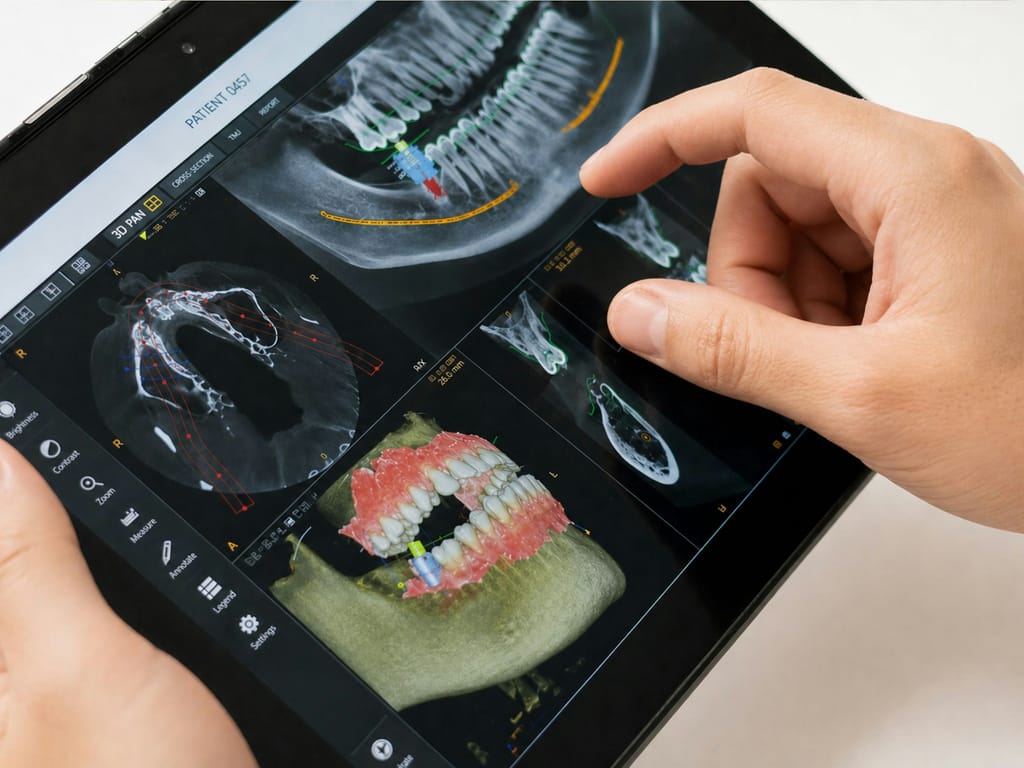
What happens between the scan and the finished restoration: how it is designed on screen, what the design must get right and how it is made.
Explore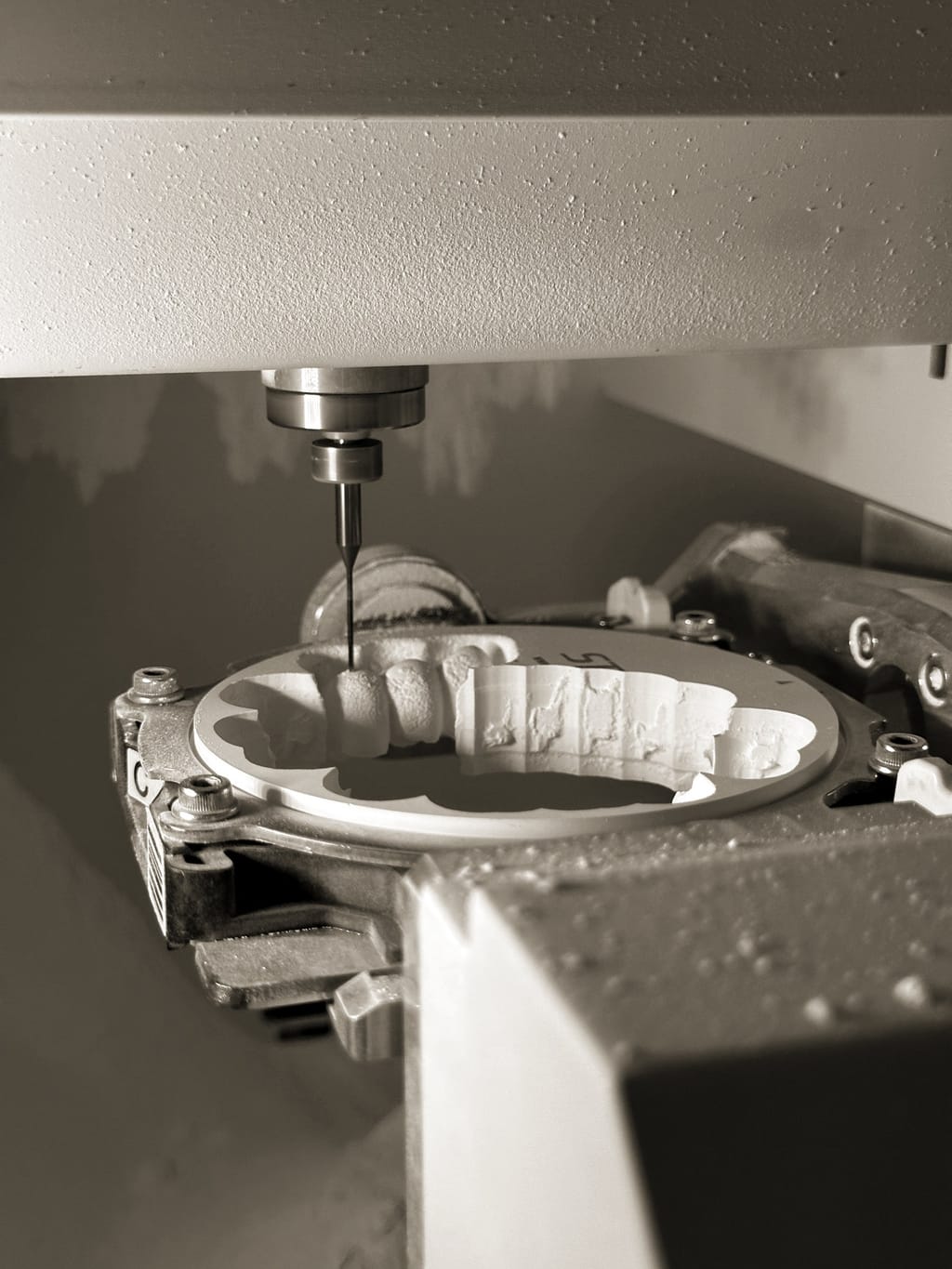
Technology
In-clinic milling
How a crown or veneer is milled from a ceramic block and finished within the practice, and when laboratory work may be the better route.
Explore
Digital workflow
Digital dentistry
How scanning, computer design and milling connect in restorative care, what they help with and where conventional methods still apply.
Explore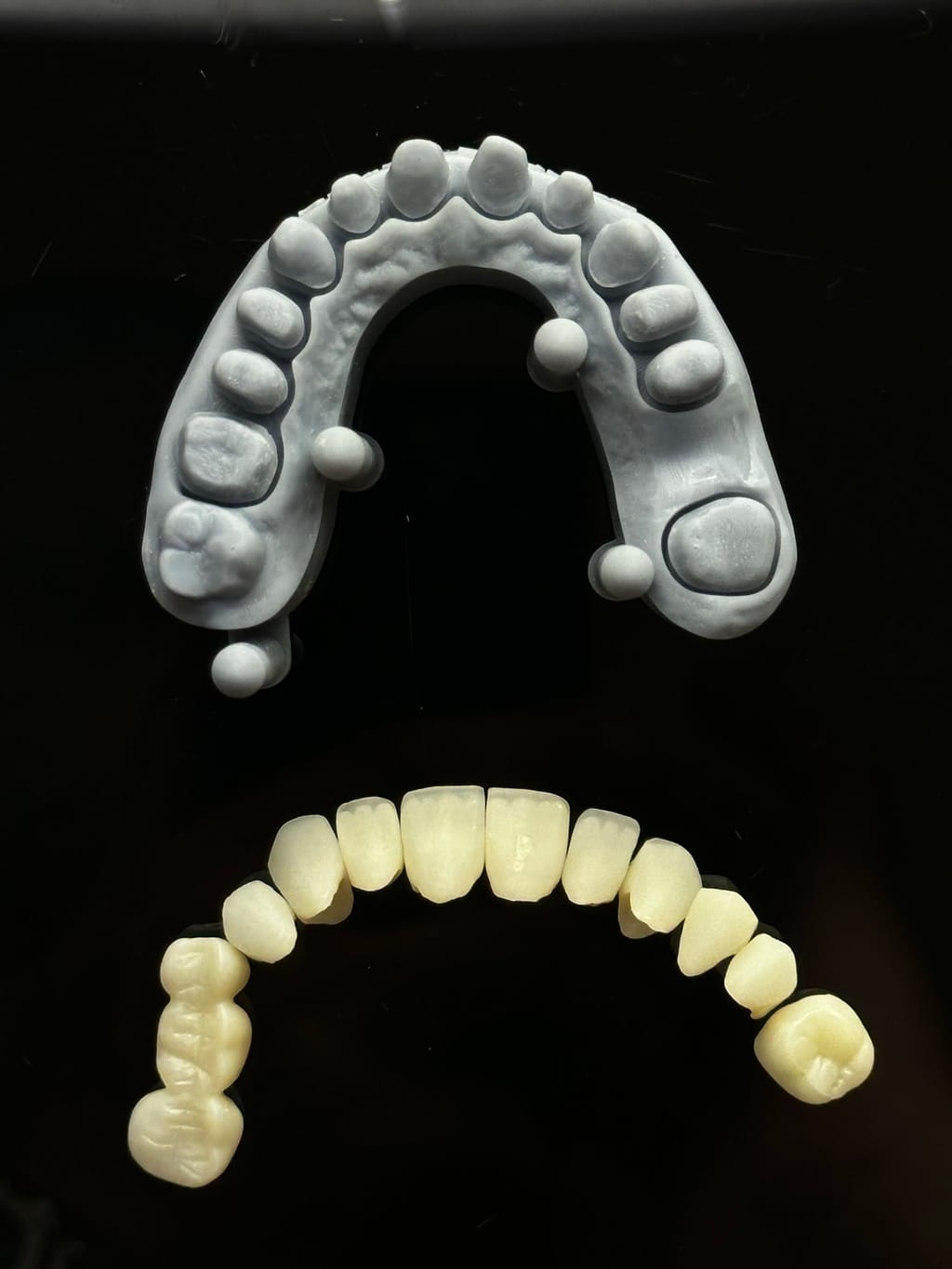
Restorative treatment
Dental crowns
Restorations that cover the whole visible tooth, often discussed when decay, fracture or large fillings have weakened it.
ExploreNext step